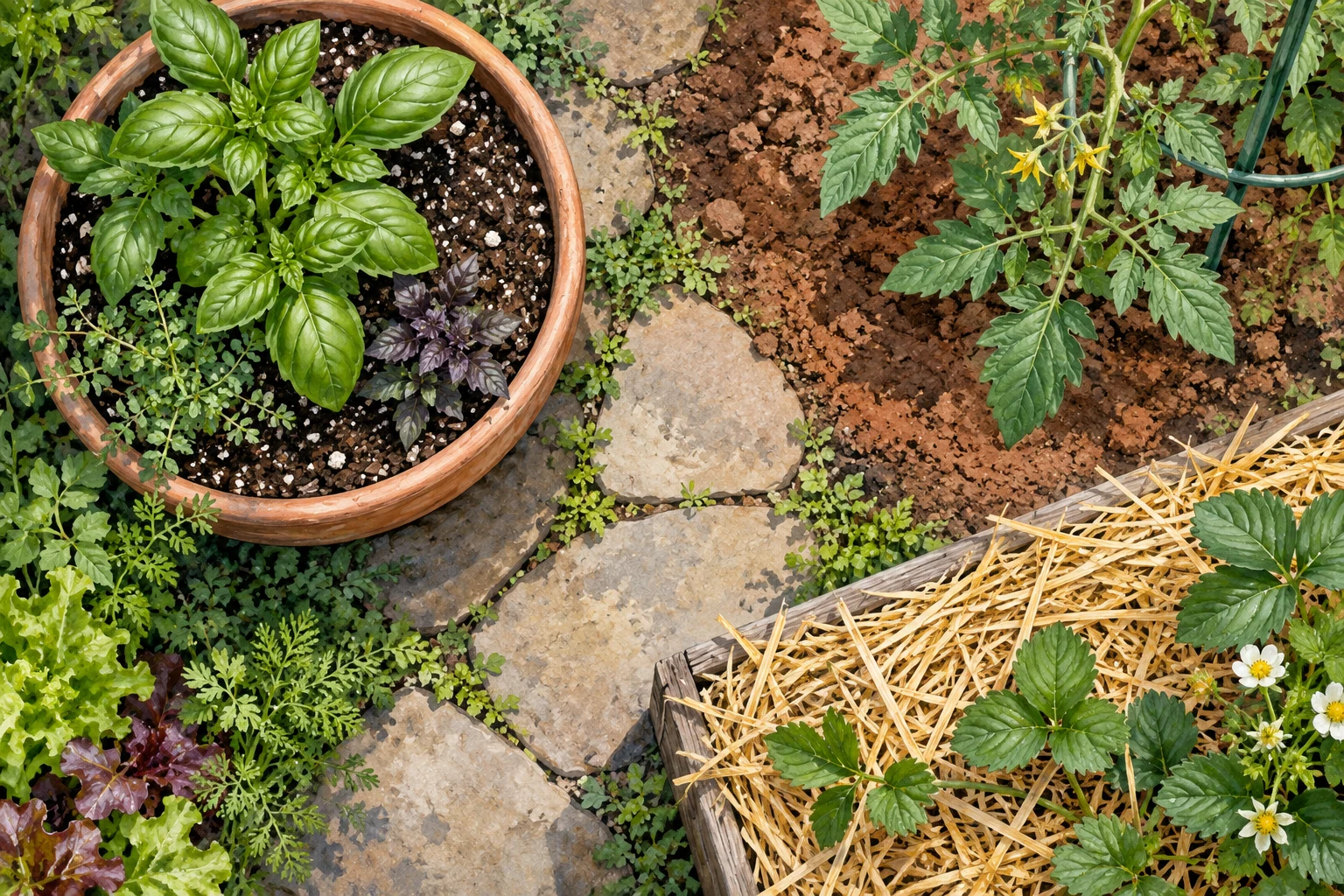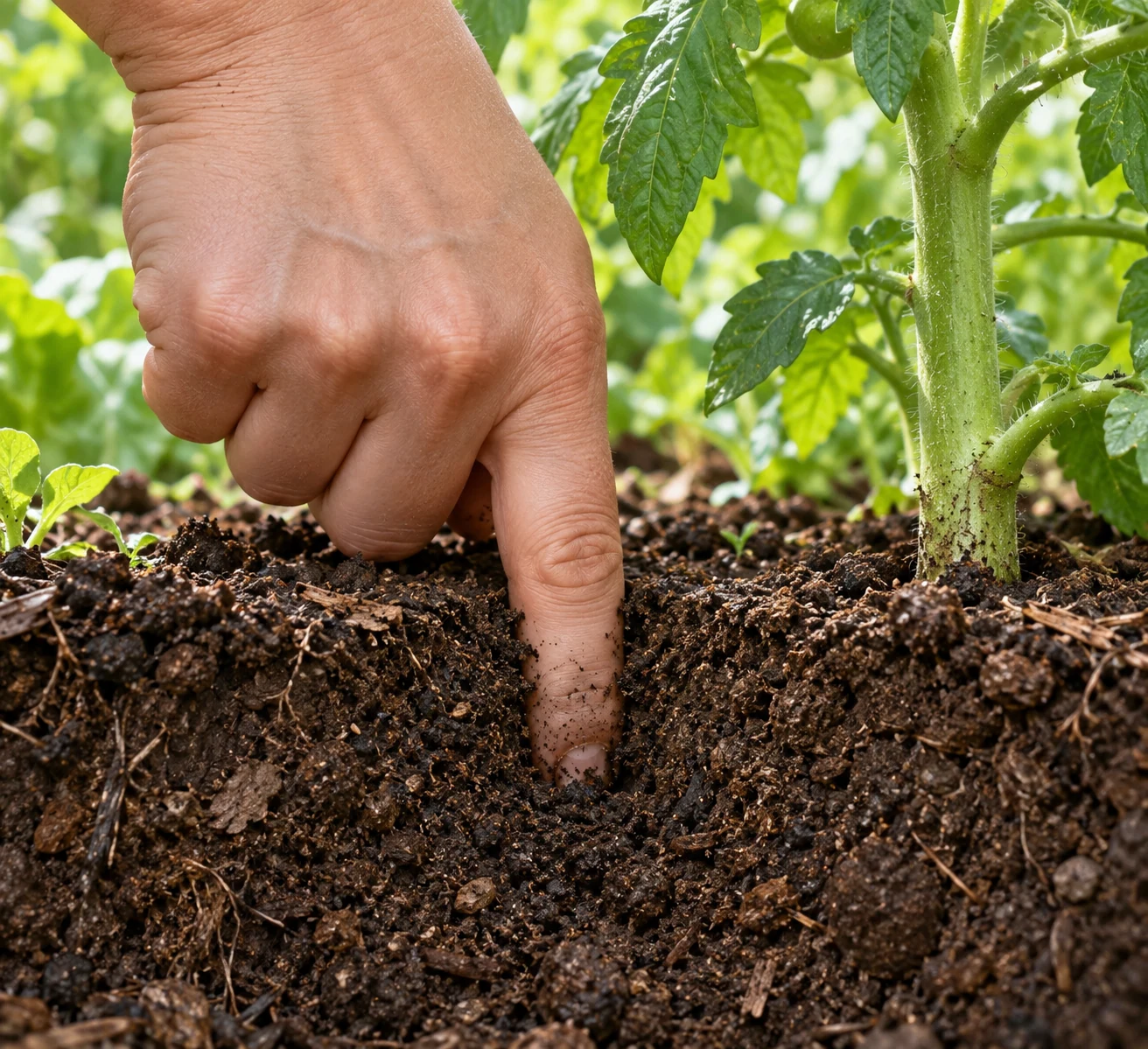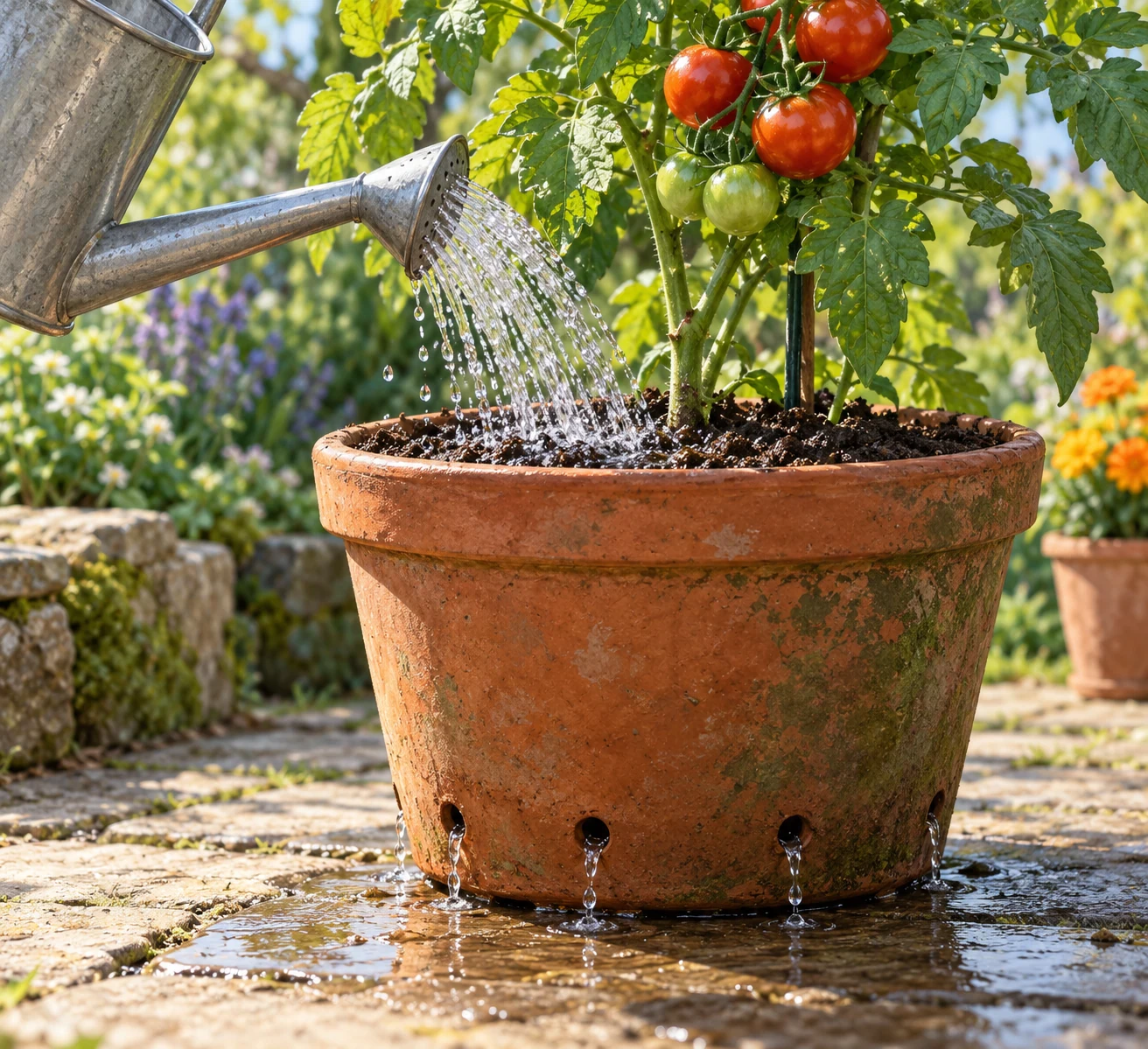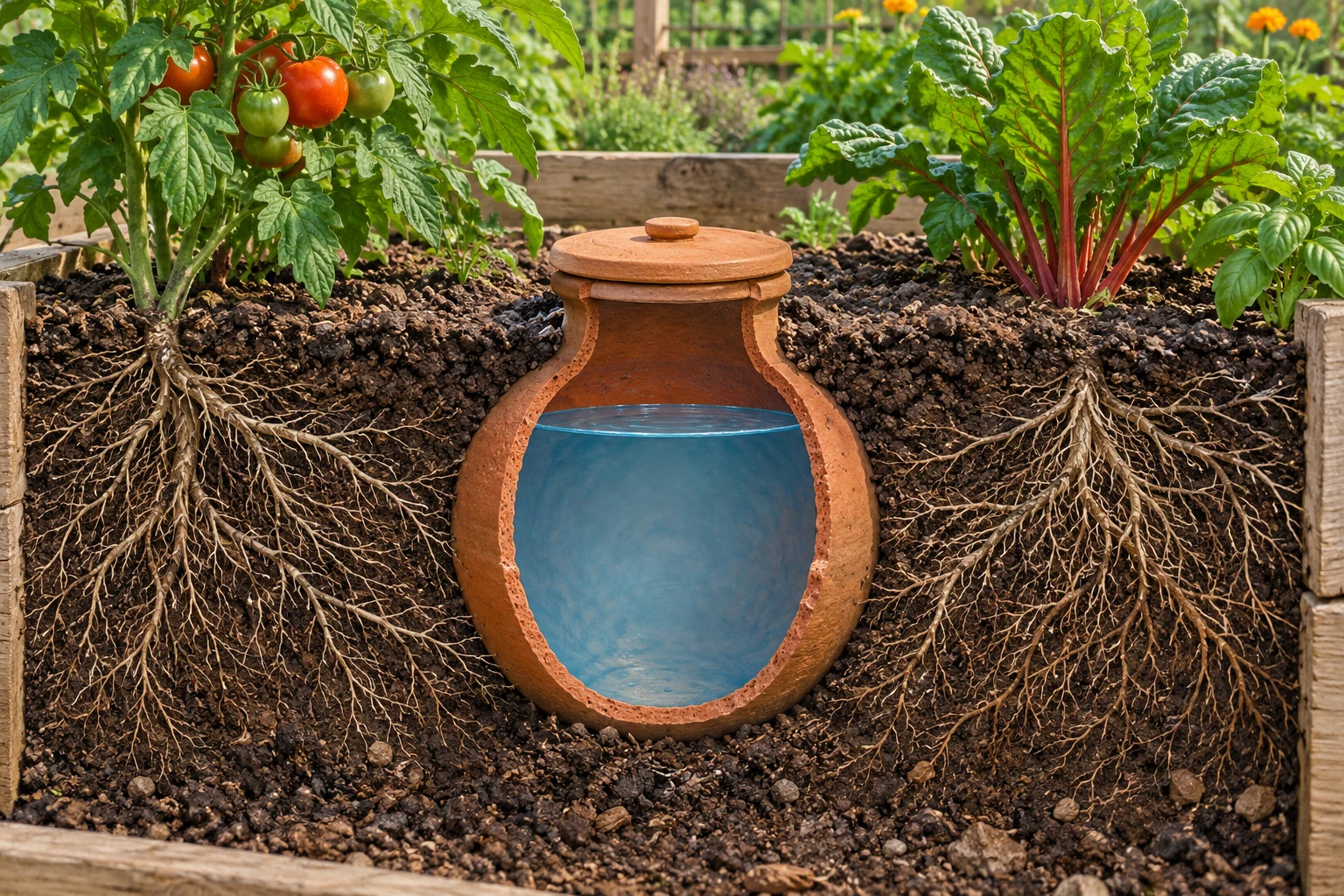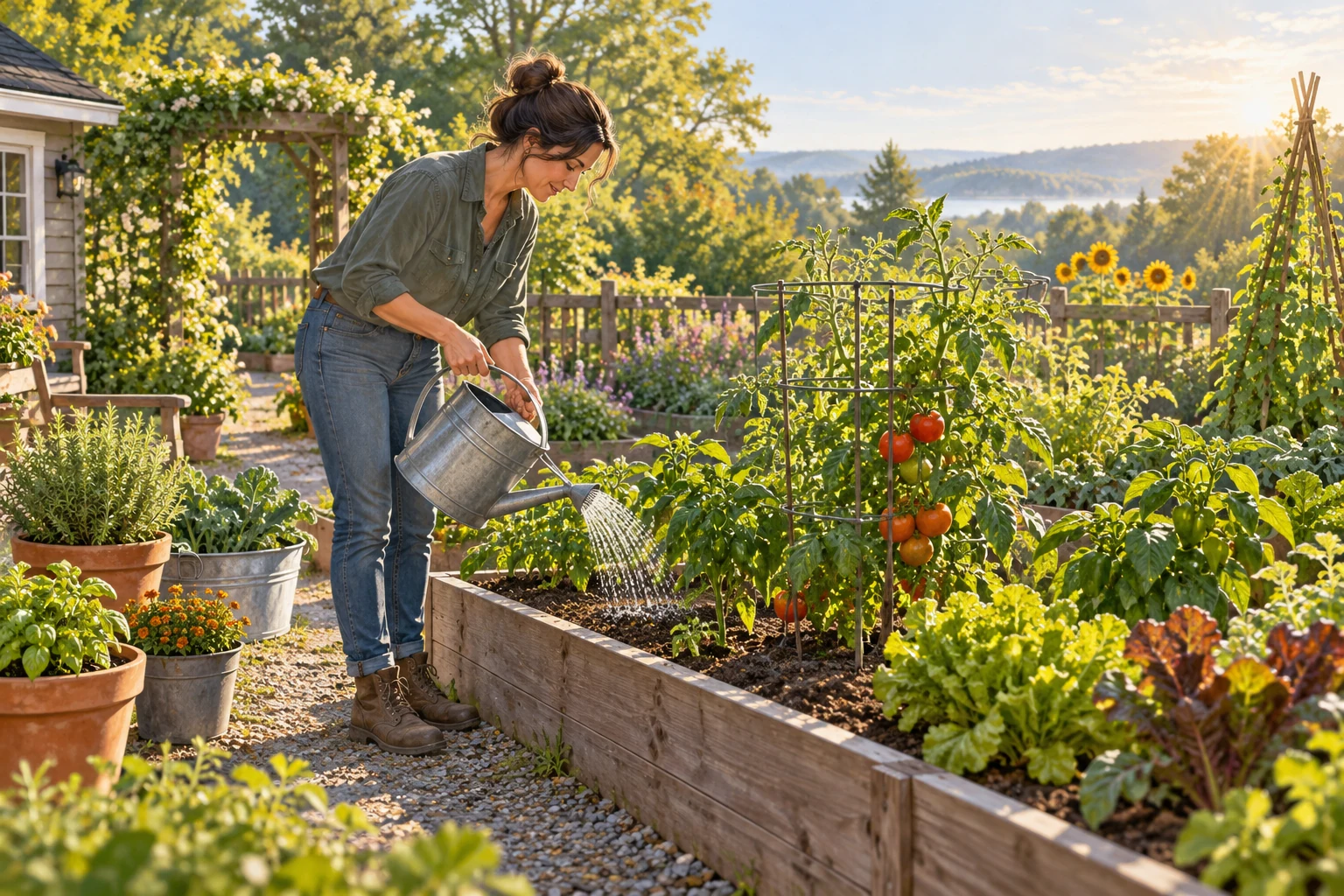
Garden plants can contain up to 90% water. When rain does not supply enough, watering helps keep them healthy and supports the fruits and vegetables you hope to harvest. The soil matters, too: clay takes in water slowly and retains moisture, while sandy soil and potting mixes drain readily and dry quickly. Compost-enriched soil and raised-bed soil absorb and drain water well, and mulch helps soil retain moisture. ## Start with the soil beneath each plant Make watering a decision you check around the garden, rather than one instruction you apply everywhere. A container filled with potting mix and a planting in clay have different moisture-holding conditions. Checking both gives you a better basis for deciding which needs attention. Treat mulch as another part of that assessment: covered soil may let you wait longer between waterings, but the moisture check still guides the decision. For a simple routine, visit your beds and pots on most days and feel the soil near the plants. Give containers a second check on hot summer days. Fast-drying soil may call for watering twice daily in summer; that possibility is a reason to check, rather than a requirement to water every pot twice. Push a finger roughly 2 inches into the soil beside a plant stem. Dry soil down to your fingertip signals a need for water; moisture at that depth means watering can wait. Persistently wet soil can indicate excess watering, which can damage roots and encourage disease. Yellowing and leaf loss are possible signs. Dry, shrinking soil and dry, wilted foliage can indicate too little water, which can limit growth and food production. ## Read the plant and the soil together Use the plant's appearance as a prompt to investigate the soil. If leaves look wilted and dry, check beside the stem before deciding what to do. Likewise, yellow leaves or falling leaves are a reason to consider whether the ground stays wet. Reading these clues together keeps the decision connected to both the plant and its growing conditions. Build your usual watering round into the morning when possible. That gives you a convenient time to check moisture and water the plants that need it before the hottest hours. Keep the routine flexible, though: if you find dry soil and wilting plants later in the day, respond then. A preferred watering time should help organize care, rather than delay water that a plant needs. Morning offers cooler air and usually lighter wind, helping plants take up water before the day's greatest heat. Aim water at the soil around the plant base. Wet foliage, particularly in the evening, can encourage fungal and other plant diseases. Apply water slowly and deeply to encourage deeper roots, then check for moisture at least 2 inches down. For containers, continue slowly until water drips through the drainage holes. ## Water slowly, then check your work With a can or hose, direct a gentle flow onto the soil and give it time to absorb. Avoid using pressure that throws soil onto leaves or washes it away. After watering, repeat the finger check: if moisture has not reached at least 2 inches, give the planting more water. For a pot, watch the bottom drainage holes while continuing the slow application. Choose equipment by considering where its water goes. A sprinkler covers a broad area, but that area may include weeds as well as vegetables, and overhead watering wets foliage. Drip lines and soaker hoses offer another approach by delivering water slowly near roots. Whichever method you choose, use the soil check to assess the result instead of assuming that time spent watering proves the soil is moist enough. Sprinkler water can be lost to heat and wind. Drip and soaker hoses keep foliage dry and may use less water than sprinklers or hand-watering; their running time needs experimentation. An olla is an unglazed clay vessel buried with its opening aboveground, filled with water, and covered. Water seeps through its walls. Ollas may suit loose raised-bed soil, but work less well in clay. Young seedlings and newly sown seeds need surface watering until roots can reach the olla. ## Fit the method to the planting If you use drip or soaker hoses, make checking the soil part of learning how long to run them. The useful question is whether the water has reached the soil depth you are checking. Different plants need different amounts, so assess conditions around the garden as you adjust your routine. An olla offers a different arrangement: a buried reservoir releases water through clay into the surrounding soil. Consider the soil before choosing it, and keep watering new seeds and seedlings from above while their roots are still too shallow to reach its water. Bring these methods back to the same sequence: feel the soil, consider the plant's condition, water slowly when needed, and check again afterward. That sequence gives your daily observations a clear purpose, whether you care for a few pots or several garden beds.